
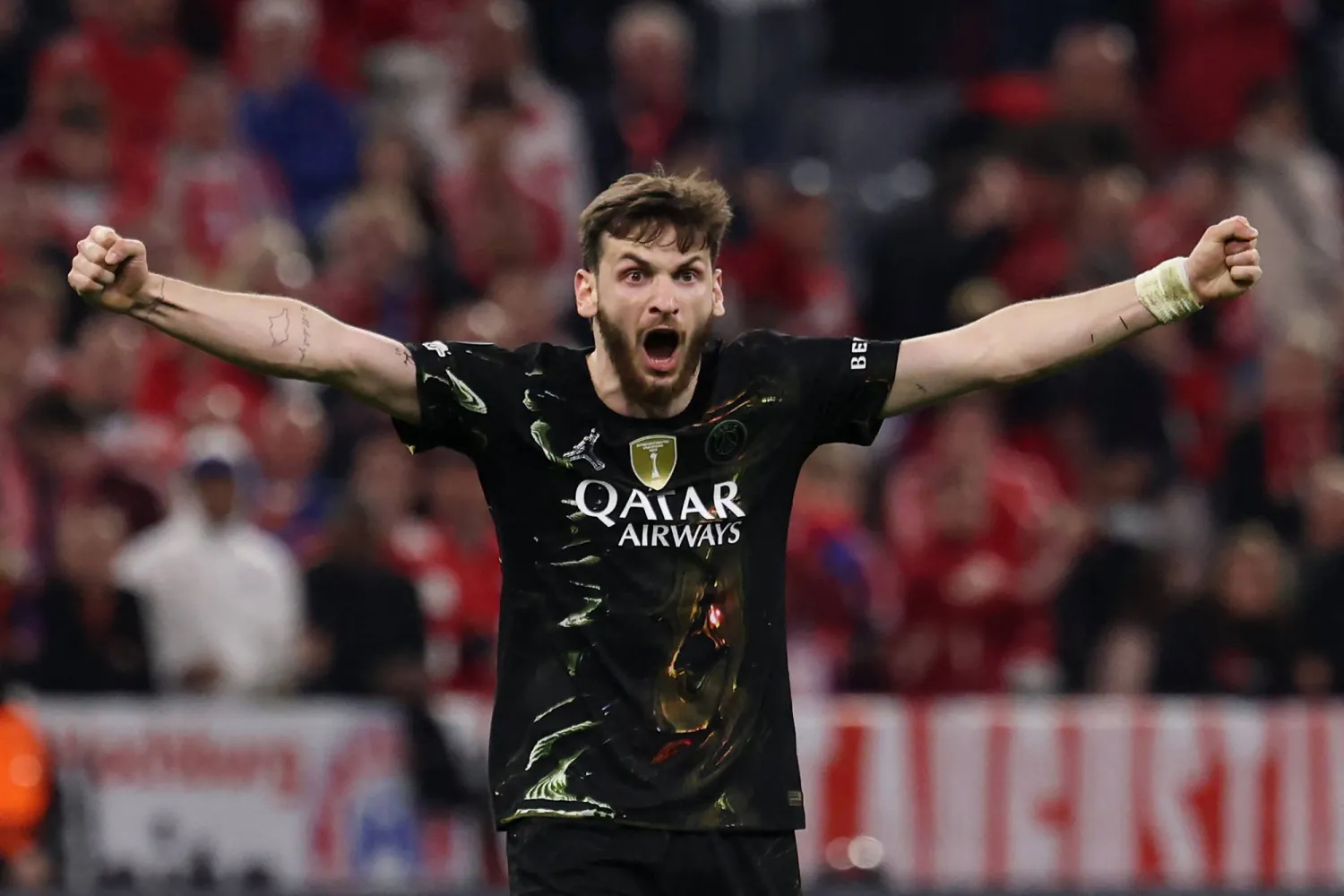
How Khvicha Kvaratskhelia Became UEFA's Champions League Player of the Season
The news itself was significant for several reasons. UEFA's Player of the Season award is not handed out lightly. Every year, Europe's elite players compete for the honor, and the list of previous winners reads like a collection of football legends. By receiving the award, Kvaratskhelia joins a select group of players who have not only excelled individually but have shaped the entire narrative of a Champions League season. The recognition comes at a time when the debate over football's next global superstar is intensifying. With established icons approaching the later stages of their careers and a new generation fighting for supremacy, Kvaratskhelia's emergence as UEFA's top performer sends a powerful message that he now belongs in football's highest tier.
What makes the story even more remarkable is how unlikely this journey once seemed. A few years ago, Kvaratskhelia was regarded as a highly talented prospect from Georgia, a footballing nation rarely associated with producing global superstars. His breakthrough at Napoli introduced him to the wider football world, but even then there were questions about whether he could consistently dominate at the very highest level. Those doubts have now largely disappeared. At PSG, he has evolved from a promising winger into a complete attacking force capable of deciding matches against the strongest opponents in Europe. His Champions League campaign served as the clearest evidence yet that his development has reached an elite level.
From a statistical perspective, Kvaratskhelia's season was exceptional. His goals and assists placed him among the competition's most productive attackers, but statistics alone fail to capture his full influence. Modern football increasingly relies on data, yet some qualities remain difficult to quantify. The fear he creates among defenders, the tactical adjustments opponents make specifically to contain him, and the confidence he gives teammates when he receives possession are all factors that numbers struggle to measure. Throughout the tournament, there was a recurring sense that whenever PSG needed inspiration, Kvaratskhelia was capable of producing it.
This is where the analysis becomes particularly interesting. Many of Europe's top attackers operate within carefully structured systems that maximize their strengths. Kvaratskhelia certainly benefits from Luis Enrique's tactical framework, but his influence often extends beyond the system itself. He possesses the rare ability to disrupt organized defenses through individual brilliance. In an era where tactical discipline dominates football, players who can genuinely create chaos remain incredibly valuable. Again and again during PSG's Champions League run, opponents appeared comfortable and organized until Kvaratskhelia received the ball. Suddenly, defensive shapes became stretched, passing lanes opened, and PSG's attack came alive.
One of the most impressive aspects of his campaign was his adaptability. Traditional wingers often rely on a predictable set of movements. Kvaratskhelia, however, constantly changes his approach depending on the opposition. Against aggressive full-backs, he uses quick combinations and intelligent movement. Against defenders who prefer to sit deep, he attacks directly and forces one-on-one situations. Against compact defensive blocks, he drifts into central areas to create overloads. This tactical flexibility makes him exceptionally difficult to prepare for and explains why so many elite teams struggled to contain him during the competition.
Another important factor behind his success was his understanding with PSG's other attacking players. Modern football increasingly rewards coordinated movement rather than isolated individual brilliance. Kvaratskhelia's chemistry with teammates allowed PSG to attack with fluidity and unpredictability. Defenders attempting to focus solely on him often found themselves creating opportunities for others. Conversely, attention given to other PSG stars frequently provided Kvaratskhelia with the space he needed to operate. The result was an attacking unit that consistently overwhelmed some of Europe's most respected defenses.
Perhaps the strongest argument in favor of his Player of the Season award lies in his performances during the knockout rounds. Many players can dominate group-stage matches against weaker opposition. The true test comes later, when every mistake is punished and every moment carries enormous consequences. Kvaratskhelia elevated his level during precisely these moments. The deeper PSG progressed into the tournament, the more influential he became. That pattern is often what separates great players from genuinely world-class performers.
The final against Arsenal provided the perfect example. Finals are notoriously difficult environments for attacking players. Space is limited, nerves are high, and both teams are usually reluctant to take unnecessary risks. Yet even in such a tense contest, Kvaratskhelia managed to exert a significant influence. His direct running repeatedly forced Arsenal defenders into uncomfortable situations, and his willingness to take responsibility ensured PSG remained dangerous throughout the match. While football history often remembers goal scorers, many finals are shaped by players who create the decisive moments rather than finish them.
The penalty incident that helped PSG level the score encapsulated Kvaratskhelia's value. It was not simply a matter of winning a penalty. The situation emerged because he possessed the confidence to attack defenders in one of the most pressurized matches of his career. Many players become cautious in such circumstances, preferring safer decisions that reduce the risk of mistakes. Kvaratskhelia did the opposite. He embraced the responsibility, challenged Arsenal's defense directly, and ultimately created the opportunity that altered the course of the final.
Following PSG's victory, discussions quickly shifted toward the broader implications of the season. One question being asked across Europe is whether Kvaratskhelia has now entered the conversation as one of the world's five best footballers. Based purely on current form, the argument is compelling. He has delivered elite performances domestically and internationally, influenced the outcome of major trophies, and demonstrated consistency against top-level opposition. Very few players can claim all three.
There is also a fascinating debate about his place among modern wingers. Football has produced countless talented wide players, but the role itself continues to evolve. Today's elite wingers are expected to score goals, create chances, press defensively, contribute tactically, and maintain consistency over long seasons. Kvaratskhelia's Champions League campaign showcased every one of those attributes. Rather than excelling in a single area, he displayed a complete skill set that reflects the demands of the modern game.
For PSG, the significance of his award extends beyond individual recognition. The club has spent years trying to establish itself as the dominant force in European football. Previous projects often relied heavily on superstar reputations. The current team feels different. It is younger, more balanced, and more tactically cohesive. Kvaratskhelia embodies that transformation. He is undoubtedly a superstar, but he also fits naturally into the collective structure Luis Enrique has built. His success therefore symbolizes the success of PSG's broader sporting vision.
The impact on Georgian football should not be underestimated either. Every footballing nation dreams of producing players capable of conquering Europe, but for smaller countries those moments carry additional significance. Kvaratskhelia's achievements have elevated the visibility of Georgian football on a global scale. Young players across the country now have tangible proof that reaching the summit of the sport is possible. His success may ultimately influence the next generation of Georgian talent just as much as it influences current discussions among football analysts.
Looking ahead, the expectations surrounding Kvaratskhelia will inevitably increase. Winning the Champions League Player of the Season award changes perceptions. Opponents will pay even closer attention to him. Defenses will develop specific plans designed to neutralize his influence. Every performance will be scrutinized more intensely than before. That is the challenge facing every player who reaches the very top of the game. Maintaining excellence is often harder than achieving it in the first place.
Yet based on everything witnessed during the 2025/26 Champions League campaign, there is little reason to believe Kvaratskhelia will be overwhelmed by those expectations. If anything, the season suggested he thrives under pressure. The biggest matches brought out his best football. The most difficult opponents inspired his strongest performances. The highest stakes produced some of his most memorable moments. Those qualities are common among football's truly elite figures, and they explain why UEFA ultimately selected him as the competition's outstanding player.
As European football turns its attention toward a new season, the story of Kvaratskhelia's rise is likely far from complete. His Player of the Season award will be remembered as recognition of an extraordinary Champions League campaign, but it may also be viewed as the moment he fully established himself among the game's global superstars. For PSG, it reinforces their position at the summit of European football. For Georgia, it marks a historic sporting achievement. For the rest of Europe, it serves as a warning that one of football's most dangerous attackers is only entering his prime years.

